- Published
- Last updated
- Publisher
- PTALK Editorial Team
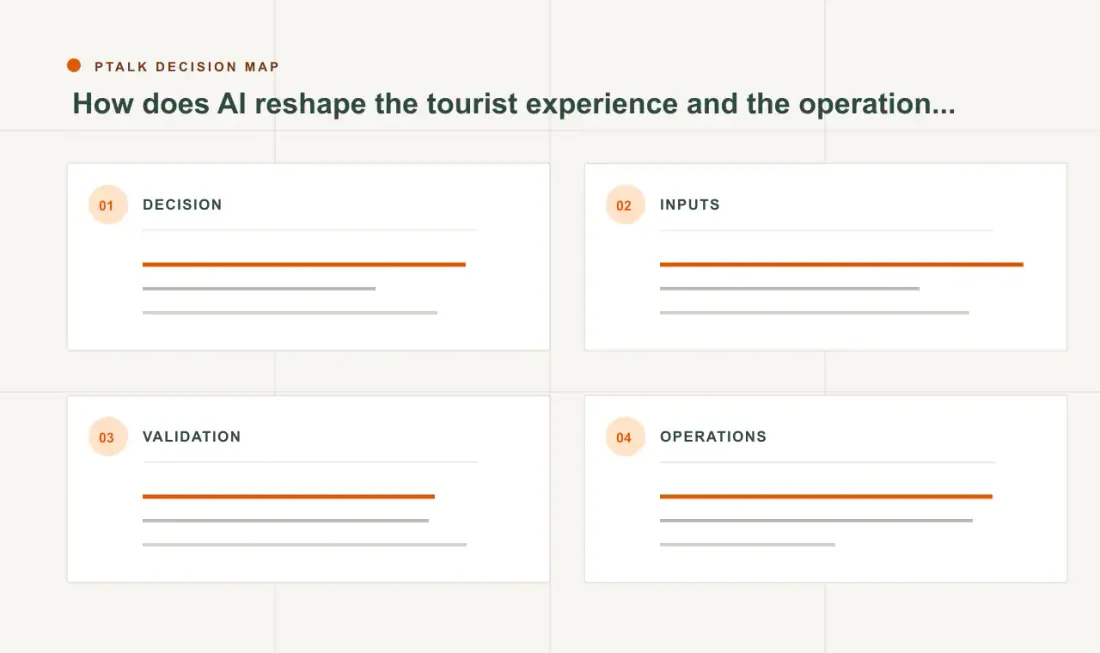
Read the decision in one minute, then use the full article for the details and boundaries.
AI can improve both the visitor journey and destination operations by connecting contextual interpretation, multilingual service, wayfinding, group communication, device fleets, and content updates.
The practical takeaway
AI can improve both the visitor journey and destination operations by connecting contextual interpretation, multilingual service, wayfinding, group communication, device fleets, and content updates.
Useful for teams studying AI cultural tourism product definition, hardware prototyping, agent platform setup, content safety, and production delivery.
For the AI cultural tourism decisions covered in this industry insights, PTALK can support product definition, smart hardware prototyping, agent platform configuration, knowledge base and persona content setup, AI mascot IP and tourism-content co-creation, content safety boundary design, device management and delivery review.
Start with the target user, device form, content scope, budget range, and launch timing, then move into prototype validation, backend configuration, pilot production, and production review.
Public pages explain capabilities, scenarios, cooperation paths, and specific evidence-backed credential or intellectual-property records. Pricing, lead time, other certifications, medical, privacy, copyright, and customer-data claims need project-specific confirmation.
Product configuration, scope, schedule, price, certification, and delivery responsibilities are confirmed against the actual brief.
Tourism experience is becoming more interactive
Scenic areas need more than static signage and one-way audio guides. Visitors expect contextual narration, multilingual support, easier wayfinding, and services that respond to what is happening on site.
AI helps operations as much as visitors
AI guide devices, team intercom, hotspot insight, emergency alerts, and content management can connect front-line service with the operations center. This makes scenic management more visible and more responsive.
PTALK's tourism delivery path
PTALK combines knowledge-base training, hardware terminals, platform management, field testing, and ongoing content operations to help scenic projects move from planning into live service.