
01
What Should a Brand Prepare for an AI Gift Project?
A brand should prepare the audience, goal, budget range, delivery date, content material, packaging requirement, and whether the AI gift needs activation or long-term operation.
From conversational toys and visitor guides to wellness companions and smart gifts, PTALK connects the device, agent behavior, content, prototype, and delivery plan around one product goal.
Align the user, use case, product form, and operating goal before choosing features or components.
Keep hardware, agent behavior, content, testing, and launch decisions in the same delivery context.
Audio modules, device form, integration, and pre-production validation.
Persona, private knowledge, voice, and maintainable content configuration.
Cloud services, device management, content updates, and operating feedback.
Combine hardware, agent behavior, and content around the real user and scenario.









A toy needs character. A visitor guide needs trusted local knowledge. A wellness device needs accessible interaction. A gift needs a reason to keep using it. Start with the job, then choose the technology.
For toy makers, IP owners, and gift channels, PTALK supports personas, private knowledge bases, voice interaction, apps, mini programs, and production-ready hardware.
PTALK connects scenic narration, exhibition guidance, multilingual service, team intercom, and device management into one tourism terminal system.
Turn cultural knowledge and destination IP into interactive mascots, smart souvenirs, and products that connect experience with retail.
Audio-video modules, device management, content configuration, and data operations reduce the gap from concept to launch.
Combine content, voice interaction, and smart hardware for brand gifts, souvenirs, and campaign merchandise.
Keep product, hardware, agent, content, testing, and operating decisions in the same project context—so the prototype answers the questions that matter before scale.
Align the user, interaction task, device form, and project boundary.
Combine audio, connectivity, modules, and structure for prototype validation.
Configure persona, knowledge, voice, content rules, and safety boundaries.
Connect the device, backend, content service, and device management.
Move into pilot production, quality checks, and production readiness.
The device must hear clearly, the agent must understand the user, the knowledge must be trustworthy, and the operations team must be able to update what happens next.
Persona design, private knowledge bases, voice libraries, privacy protection, and natural-language command control.
Device management, user operations, content configuration, analytics, and knowledge-base management in one platform.
Branded user touchpoints that connect devices, content, services, and long-term customer operations.
You bring the market, customer, and product vision. PTALK aligns hardware, agent behavior, content, testing, and delivery around the same product brief.
Align the user, interaction task, device form, and project boundary.
Combine audio, connectivity, modules, and structure for prototype validation.
Organize personas, private knowledge, voice, and maintainable content configuration.
Define response, privacy, and content-governance rules for the target user and environment.
Connect device state, content configuration, and the controls needed for ongoing operations.
Move into pilot production, quality checks, and production readiness.
PTALK helps teams turn an AI product idea into a testable device by aligning hardware, agent behavior, approved content, integration, and delivery planning around the same user experience.
AI toys and brand IP interaction products; Zhiyoubao AI cultural tourism guides, scenic interpretation, study tours, inbound tourism, and souvenir terminals; AI wellness companions, reminders, and content interaction devices; AI gifts, cultural souvenirs, and campaign merchandise; Smart hardware prototyping, agent platform integration, and pre-production review
product definition, smart hardware prototyping, agent platform configuration, knowledge base and persona content setup, AI mascot IP and tourism-content co-creation, content safety boundary design, device management and delivery review
Start with the target user, device form, content scope, budget range, and launch timing, then move into prototype validation, backend configuration, pilot production, and production review.
Public pages explain capabilities, scenarios, cooperation paths, and specific evidence-backed credential or intellectual-property records. Pricing, lead time, other certifications, medical, privacy, copyright, and customer-data claims need project-specific confirmation.
Scope, schedule, quantity, price, certification, and production responsibilities are confirmed against the actual product brief.
Review the starting challenge, product form, public solution context, and the practical questions behind each project.
 CASE 01
The Three Gorges Dam case focuses on making complex engineering culture easier to understand through multilingual AI int…
 CASE 02
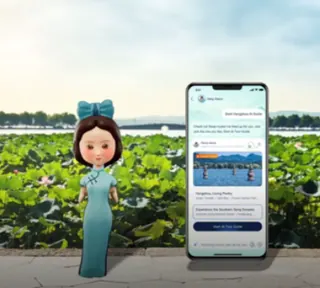
Hang Xiaoyi is framed as an AI travel companion for Hangzhou, connecting visitor questions, navigation, local culture, m…
 CASE 03
This case explores how Shenzhen Splendid China can use AI visitor companions, multilingual service, recommendations, and…
Match models, cloud services, modules, connectivity, and supply-chain choices to the product form and operating environment.
Can the enclosure be reused? Who owns the content? What changes after launch? Which claims need project evidence? Clear answers reduce rework later.
An agent platform should support persona design, knowledge bases, content review, version control, device groups, and operation feedback for long-term…
Smart AI hardware should choose connectivity, microphone, speaker, and cloud architecture based on interaction distance, latency, cost, battery life,…
AI toys are moving from fixed playback to contextual companionship. For brands, the opportunity is to combine character, safe conversation, learning c…
Get direct answers on product scope, hardware reuse, persona setup, content operations, timing, and what to prepare for the first review.
A brand should prepare the audience, goal, budget range, delivery date, content material, packaging requirement, and whether the AI gift needs activation or long-term operation.
PTALK can evaluate whether an existing toy can add AI voice interaction by checking internal space, power, speaker, microphone, connectivity, cost target, and production modification difficulty.
The current website backend uses account login but does not divide active administrators into separate roles. Active users can maintain published content, media, leads, navigation, settings, redirects, and notifications.
Send the target user, use case, product form, core interaction, expected quantity, target schedule, budget range, and what hardware, software, content, or operating resources already exist.
Tell us who it is for, where it will be used, what form it should take, and what stage you are at. We will help identify the questions to validate next.